
Municipal Infrastructure Planning, Archipiélago de Juan Fernández, Chile
Olaunu assisted the community of San Juan Batista on the island of Robinson Crusoe in Chile with evaluation of sustainable solutions for various infrastructure issues.
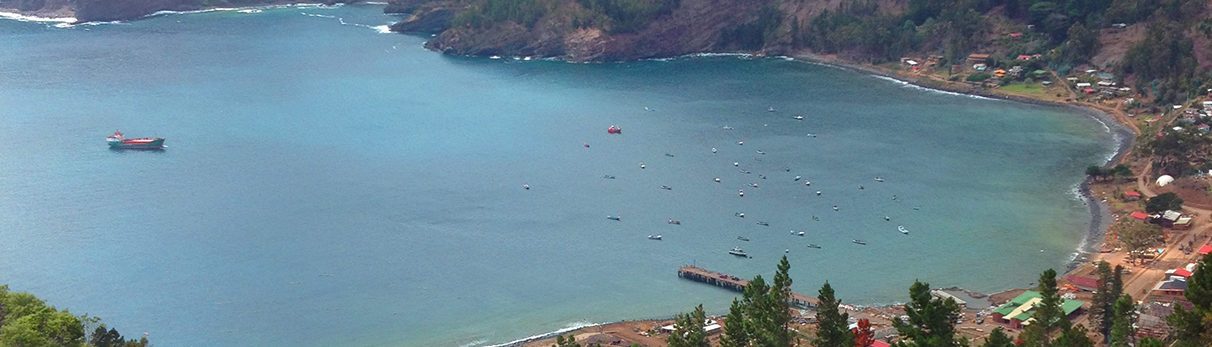
- Client: Community of San Juan Batista, Juan Fernandez Archipelago, Chile
- Location: Community of San Juan Batista, Juan Fernandez Archipelago, Chile
- Duration: 1 year
The project included an evaluation of engineering options for improving stormwater management, potable and wastewater management, energy generation, and solid waste management with considerations for climate change impacts projected for the island. The stormwater management evaluation included evaluation of integrating Low Impact Development and green infrastructure into the community to reduce volume and velocity of stormwater generated and to reduce the impact on the community’s lobster beds, which are the primary source of income for the community. A SWMM model was developed as a tool to evaluate the effectiveness of integration of LID features into the community. Additionally, the stormwater evaluation included an evaluation of stormwater capture and use to augment their potable water supplies.
The primary challenges of the project included the fact that the location of the community of San Juan Batista on the island of Robinson Crusoe is extremely remote, the landslide issues and steep terrain of the island and the community, and the lack of funding to upgrade the infrastructure.
The solutions integrated into the project focused on developing sustainable solutions to best achieve infrastructure upgrades for the community in the most efficient way. Due to the remote nature of the location of the community, the integrated infrastructure solutions were identified to achieve multiple benefits. For the LID elements, local plants and the ability to develop engineered soil for bioretention soils were evaluated as the cost to bring in plants and soil from mainland Chile for these types of systems would be too expensive. Landslide issues were addressed with identification of erosion and sediment controls appropriate for steep terrain. The steep terrain also was a factor in the LID systems evaluated, including bioretention systems and bioswales with check dams to better attenuate stormwater flows on hill sides. Funding issues were hoped to be resolved through the investigation of grants and loans from both the public sector and private foundations.